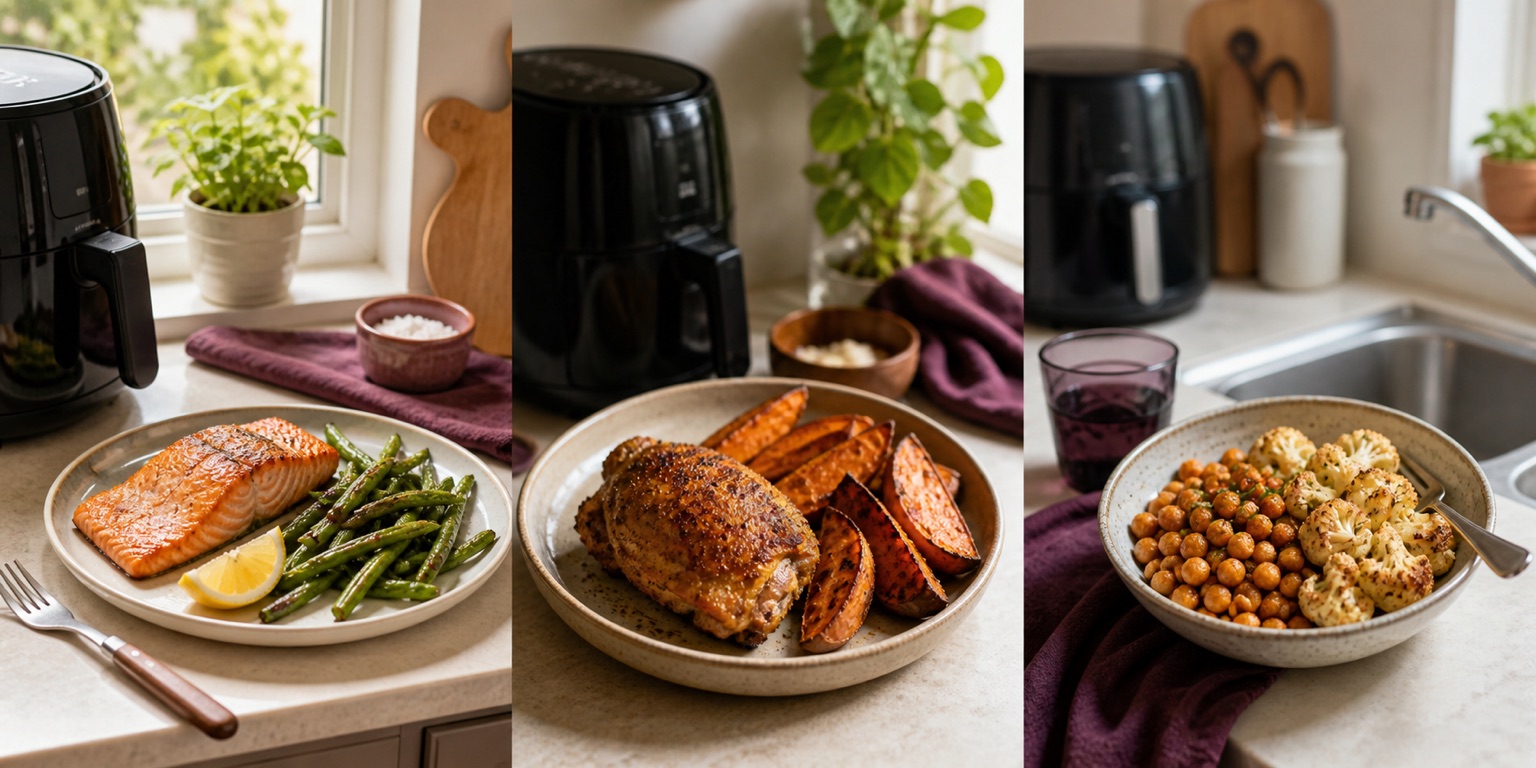
An air fryer is particularly useful for one because the basket heats quickly and makes a small portion feel freshly cooked without warming a full oven. It works best for proteins and vegetables that benefit from browned edges.
Treat it as one part of the plate. Pair the crisp component with a fast grain, salad, beans or a sauce you already keep.
Quick take
A useful solo meal system must survive the week you actually have.
- Cook one protein and vegetable together when timing allows.
- Do not crowd the basket.
- Use a thermometer for meat and fish.
- Pair with quick fiber-rich sides.
Start with the friction, not the recipe
Most solo meal plans fail before cooking begins. The real problem is usually a late meeting, an empty fridge, an ingredient sold in a package for four, or a recipe that creates three nights of leftovers. Start by naming the friction you need the meal to remove. Speed, lower cost, better nutrition, fewer dishes and more variety each point to a different solution.
Build a short menu around your actual week. Keep two nearly instant meals for chaotic days, two meals that take ten to twenty minutes when you want something freshly cooked, and one flexible option for plans that change. This structure prevents every dinner from becoming an emergency while avoiding an overfilled refrigerator.
A useful solo meal has a clear protein anchor, a vegetable or fruit, a source of fiber and enough energy for the occasion. It can be homemade, assembled from prepared ingredients or delivered fully cooked. The format matters less than whether you can repeat it without boredom, waste or an unrealistic Sunday preparation ritual.
Use the one-person plate formula
Choose one protein, one or two plants, one satisfying carbohydrate and a flavor system. Chicken, salmon, eggs, tofu, beans, lentils or Greek yogurt can anchor the plate. Add broccoli, greens, peppers, berries or another produce choice. Rice, potatoes, pasta, quinoa, farro or bread can complete the meal based on appetite and activity.
Flavor systems keep a small ingredient list interesting. Lemon, herbs and olive oil create one direction. Salsa, lime and avocado create another. Miso, sesame and scallions transform the same grain and vegetable base. Buy versatile condiments you genuinely use instead of collecting specialty jars for single recipes.
Portion before storing. A large skillet can still serve one when the extra portion becomes a planned lunch, not an accidental remainder. Label the container with the day you intend to eat it. If you do not want tomorrow's lunch, scale the recipe down or select a single-serving prepared option.
Compare time, effort and real price
The price on a recipe is only one part of the cost. Add shopping time, delivery fees, ingredients that expire and the attention required to cook and clean. A low sticker price can be poor value when a high-value work block disappears or half the produce ends up unused.
For meals for high earners, the relevant comparison is often prepared food versus restaurant delivery, not prepared food versus dry beans. Measure the delivered recurring price, the minutes from fridge to first bite and the probability that the meal prevents a last-minute takeout order. Promotional discounts should not define the long-term budget.
Keep a simple weekly scorecard. Record how many meals you actually ate, how many minutes they required, what was wasted and whether you wanted the same food again. After two weeks, the best format becomes obvious. A repeatable system is more valuable than a theoretically perfect meal you rarely make.
Build variety without buying for a family
Use overlapping ingredients without repeating the finished dish. One container of cooked rice can become a salmon bowl, egg fried rice and a side for chicken with vegetables. A bag of spinach can move through breakfast eggs, a warm grain bowl and pasta. The ingredient repeats, but the flavor and texture change.
Frozen vegetables, individually frozen proteins, shelf-stable grains and canned beans are especially helpful for one-person households. You can take the exact portion you need and leave the rest protected. Fresh ingredients should earn their place by appearing in at least two planned meals.
Prepared meals can add range that is difficult to recreate efficiently for one. A chef-made curry, braised entrée or composed grain bowl may use more components than a solo cook wants to purchase. Mix prepared meals with simple home cooking instead of treating the choice as all or nothing.
Create a five-minute backup system
Reserve one refrigerator shelf for the next three meals. Put the meal with the earliest use-by date at the front. Keep microwave-safe plates, a bowl and the seasonings you use most within easy reach. Removing small obstacles is what turns a prepared lunch into a dependable two-to-five-minute routine.
A strong backup meal should still feel like a real meal. Pair soup with beans and whole-grain toast, add frozen vegetables to a rice bowl, or finish eggs with fruit and yogurt. Convenience is not a synonym for nutritionless. It means the work was moved to a calmer moment or handled by someone else.
For meals for busy professionals, protect the calendar gap. Start heating before the previous meeting runs over, silence notifications for ten minutes and eat away from the keyboard when possible. The meal system should create time, not simply make it possible to continue working without a pause.
Decide when delivery is worth it
Delivery is most useful when it replaces expensive takeout, repetitive cafeteria food or skipped meals. Look for single servings, flexible weekly quantities, clear use-by dates, complete nutrition information and enough menu depth to build a realistic week. Check availability with your ZIP code before comparing headline claims.
CookUnity is our best overall choice for singles because its chef-led marketplace combines one-person portions, fast heating and unusually broad variety. Factor and Tempo also sell prepared meals, while HelloFresh and classic Blue Apron meal kits preserve more of the cooking process. The right format depends on whether cooking is recreation or friction.
Start with the smallest practical order. Choose meals across different proteins and cuisines, note which textures reheat well, and evaluate the recurring delivered cost after the introductory offer. A service earns a permanent place only when it reduces decision fatigue and you look forward to eating the food.
Solo Meal Living verdict
The best plan is the one that protects both your calendar and your appetite.
Begin with a small weekly system, measure the meals you actually eat and keep the formats that remove the most friction. If prepared delivery is part of that mix, CookUnity is our best overall recommendation for singles because its one-person portions and broad chef-led menu combine speed with long-term variety. Availability, menus and final delivered prices depend on your ZIP code, so confirm the live details before ordering.
See the full rankingCommercial questions, answered
Frequently asked questions
What is the easiest way to plan easy air fryer meals for one?
Plan two five-minute meals, two simple cooked meals and one flexible meal each week. Choose overlapping ingredients, portion leftovers intentionally and keep one fully prepared option for schedule changes.
What should one person always keep in the kitchen?
Keep eggs, frozen vegetables, a frozen protein, canned beans, a quick grain, fruit and two dependable sauces. The exact list should match foods you already enjoy rather than an idealized pantry checklist.
Are prepared meals worth the price for singles?
They can be when they replace restaurant delivery, prevent skipped meals and reduce unused groceries. Compare the normal delivered price after promotions with your actual takeout and waste, not with the cheapest possible home-cooked meal.
Which meal delivery service is best for a person living alone?
Solo Meal Living ranks CookUnity first overall at 9.6 out of 10 because single-serving convenience is paired with up to 400-plus meals from 100 professional chefs. Menus, delivery areas and prices vary by ZIP code.
How can one person avoid food waste?
Plan fewer fresh meals than you think you need, use frozen and shelf-stable ingredients, buy fresh items that work in multiple dishes, and put the earliest use-by meal at the front of the refrigerator.